
Deck Repair: What Needs Fixing Before It Fails
A deck can look fine from the yard and still have problems where the structure meets the house, around the posts, or below the walking surface. Good deck repair is not just replacing a few weathered boards. It starts with finding out why the boards failed and whether the framing underneath is still doing its job.
On the Northshore, decks take a beating from heat, rain, humidity, and long stretches of damp weather. Wood stays wet longer than most homeowners realize, especially in shaded areas and where leaves collect. That moisture is usually where a small maintenance issue turns into rot, loose connections, or a soft spot underfoot.
Start Deck Repair Below the Surface
The deck boards are the part everyone sees, so they are often where attention goes first. But a new surface installed over weak framing does not solve much. The things you do not see are often what determine how long the finished project lasts.
A proper inspection starts at the ground and works upward. Posts should be checked for decay near the base, particularly where they meet concrete or soil. Beams and joists need to be checked for splitting, insect damage, sagging, and soft wood. Fasteners, brackets, and hardware should be secure and appropriate for exterior use.
The connection between the deck and the house deserves special attention. If the ledger board is loose, improperly flashed, or attached over damaged siding, water can get behind it and cause hidden rot. That is not a place for guesswork or a quick cover-up. The deck may be stable today, but a compromised house connection can become a much larger repair if moisture is allowed to keep working behind the wall.
A deck can also move because the footings have settled, the posts are undersized, or the framing was never built to carry the span it is carrying. Sometimes the repair is limited to a few damaged members. Other times, the right answer is to rebuild a section so the structure has solid support again. It depends on what is sound and what is not.
Signs Your Deck Needs More Than New Boards
Surface wear is normal. Splinters, fading, minor checking, and a worn finish do not automatically mean a deck is failing. The concern is when the wood has lost its strength or the structure no longer feels solid.
Pay attention if you notice several of these conditions:
Boards that feel soft, spongy, or springy when walked on
Cracked or loose railing posts that move when leaned against
Joists, beams, or posts with dark staining, deep splits, or visible rot
Rusted fasteners, missing connectors, or nails backing out of the boards
Deck areas that slope, sag, or pull away from the house
A railing is not just a finishing detail. It needs to be solid enough to support someone who stumbles or leans against it. The same goes for stair stringers, treads, and handrails. These are often the first areas to show wear because they take concentrated traffic and hold moisture at joints.
If one board is cracked but the framing and surrounding boards are sound, a targeted repair may make sense. If several boards are soft and the joists below show decay, replacing only the top layer usually wastes money. A homeowner deserves to know the difference before material is ordered and work begins.
Rot Has a Cause, Not Just a Location
Rot is a moisture problem first. Replacing the damaged wood matters, but preventing the same condition from returning matters just as much.
Water commonly gets trapped where deck boards are packed too tightly together, where leaves collect between the deck and house, or where the deck surface does not drain well. It can also sit on horizontal framing members beneath old boards. Once the protective surface of the wood is worn away, repeated wetting gives decay a place to start.
Details such as proper board spacing, flashing, exterior-rated fasteners, and keeping wood separated from constant ground moisture are not glamorous. They are the details that extend the life of the repair. In some cases, adding protection at the tops of joists before new decking goes down is a worthwhile step because those joists are difficult to reach later.
Not every discolored area is active rot, and not every split means a board must come out. Wood can check and weather naturally outdoors. The question is whether it is still structurally sound. A screwdriver test in a suspect area can reveal soft fibers, but the full picture comes from looking at the member, its connections, and the water path around it.
Choosing Materials for a Lasting Repair
Material choices should fit the deck, the budget, and how much ongoing maintenance the homeowner wants to take on. There is no single right answer for every deck.
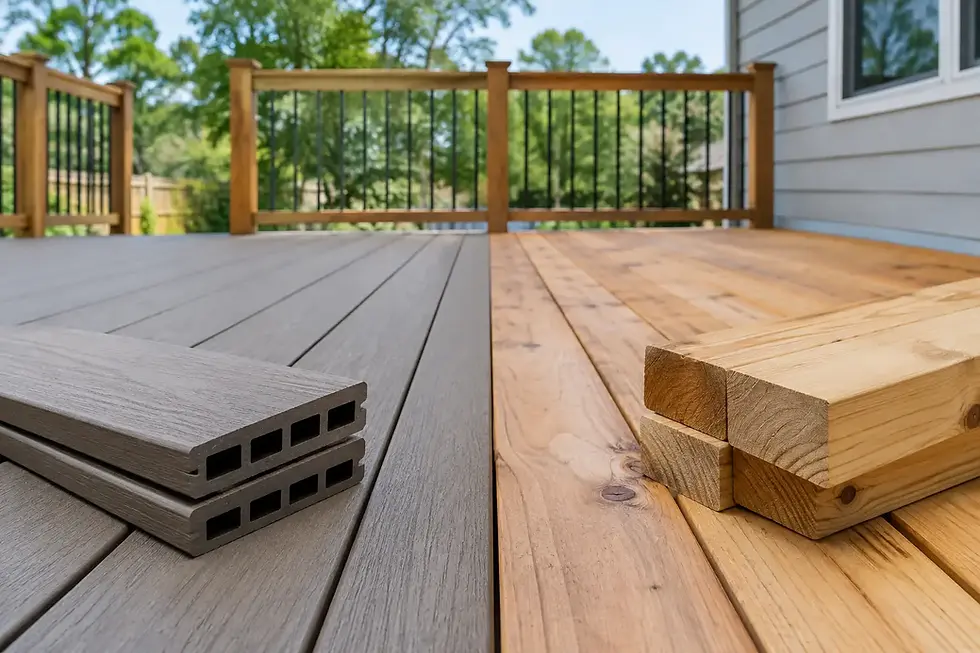
Pressure-treated lumber remains a practical choice for framing and for many deck surfaces. It is readily available, durable when installed correctly, and repairable in sections. It still needs time to dry after installation before staining or sealing, and it benefits from routine cleaning and maintenance.
Composite decking can reduce surface maintenance and gives a more uniform finished look, but it costs more and needs the framing beneath it to be flat and properly spaced. Composite boards can also retain heat in direct sun and are not a cure for bad structure. If the joists are uneven, weak, or incorrectly spaced, those problems should be addressed before composite decking goes on.
For railings, wood can match an existing deck and offer a traditional look, while manufactured systems can provide a lower-maintenance option. The important part is not simply the material. Posts need solid attachment, rails need proper support, and the entire system needs to feel firm when it is finished.
When repairing an older deck, matching every existing board perfectly may not be possible. Sun exposure changes wood color over time, and older materials may be discontinued. A good repair plan considers where a transition will look intentional, whether a partial replacement will blend reasonably well, and whether replacing a larger section is the better value.
What a Good Repair Process Looks Like
Before replacing anything, the damaged areas should be identified and the scope should be clear. That includes explaining what is being repaired, what is being replaced, and what may be uncovered once decking comes off. Honest communication matters here because hidden framing cannot always be fully evaluated until the surface is opened.
Once the deck is opened up, the repair should move from structure to finish. Failed posts, beams, joists, and connections are addressed first. Then the surface boards, stairs, railings, trim details, and protective finish can follow. Doing it in that order prevents new material from being installed over a problem that should have been corrected first.
Afterward, regular maintenance is simple but worthwhile. Keep leaves and debris cleared out. Watch for standing water. Clean the surface as needed, and inspect railings, stairs, fasteners, and the house connection at least once a year. Small repairs are easier when they are found early.
At Spitzley Builds, deck work is approached the same way as any repair around a home: find the real issue, explain the options clearly, and build the repair so it has a reason to last. A deck should be a place where family and guests can gather without wondering what is happening under their feet.
If your deck has soft boards, loose railings, signs of rot, or unexplained movement, do not assume the solution is just a new coat of stain. Have the structure looked at closely, repair what has actually failed, and give the parts you cannot see the same attention as the finished surface. Built Right, Built to Last.

Comments