Why Do Interior Doors Stick? Causes and Fixes
A door that catches at the top corner, rubs the jamb, or needs a hard shoulder to close is more than a daily annoyance. Homeowners often ask, why do interior doors stick when nothing obvious looks broken. The answer is usually a small change in moisture, hardware, framing, or the door itself. Finding the real cause matters because sanding the sticking edge may help temporarily, but it can also create a bigger gap when conditions change again.
In South Louisiana, humidity is often part of the story. But humidity is not the only explanation, and it is not always the main one. A door should be evaluated where it is rubbing, when it sticks, and whether the problem has changed over time.
Why Do Interior Doors Stick in the First Place?
An interior door works because several parts are aligned with a fairly small amount of clearance between them: the door slab, hinges, jamb, stop molding, strike plate, and flooring. If one of those parts moves even a little, the door can start rubbing or fail to latch properly.
Most sticking doors fall into one of two categories. Either the door or frame has changed size or position, or the hinges are no longer holding the door in the correct position. The repair is different for each situation.
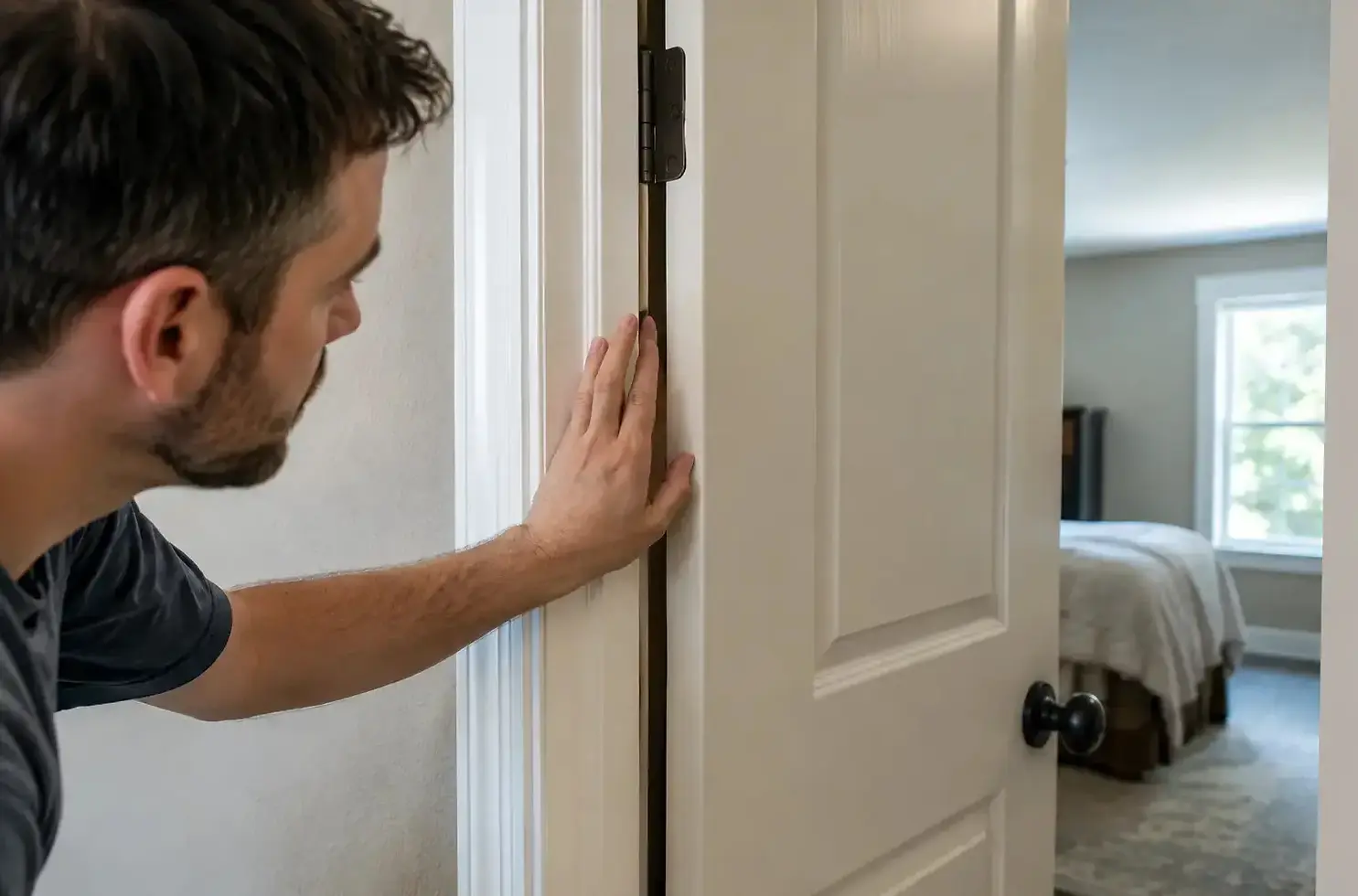
A quick look at the reveal, which is the visible gap around the door, tells you a lot. A tight gap along the hinge side may point to hinge or jamb movement. A tight gap at the top on the latch side often means the door has sagged. A door rubbing evenly along one long edge may have expanded from moisture or may have been fit too tightly from the beginning.
Seasonal humidity and swollen wood
Wood absorbs and releases moisture. In a humid stretch of weather, solid wood doors and wood components can swell slightly. Painted doors are not immune, especially at unfinished or poorly sealed edges. Even a hollow-core door can be affected if moisture reaches the wood framing inside the slab or the jamb material around it.
This does not mean every sticky door needs to be cut down. If the door sticks only during very humid periods and operates normally once indoor conditions dry out, removing material can leave an oversized gap later. The better first step is to identify exactly where the contact occurs and check whether the door was already fit with too little clearance.
Bathrooms, laundry rooms, and rooms with poor air circulation are common places to see this. A door that swells after showers may also be telling you that ventilation is not keeping up with the moisture in the room.
Loose hinges and sagging doors
Loose hinge screws are one of the most common and most fixable causes of a sticking interior door. Every time a door opens, its weight pulls on the top hinge. Over years of use, screws can loosen or strip out in the jamb. The door then drops slightly on the latch side and begins scraping at the top corner or dragging across the threshold.
Start by opening the door and checking for movement at the hinges. If the hinge leaf shifts when the door is lifted, the screws need attention. Simply tightening them may be enough if the screw holes are still sound. If they spin without grabbing, the repair needs to restore solid holding power in the wood behind the hinge. A longer screw may be appropriate in some situations, but it needs to be selected and installed carefully so it pulls the jamb into position without causing other alignment problems.
Hinges themselves can also be bent, worn, or installed with screws that are too short. Those details are easy to overlook, but they directly affect how the door hangs.
A jamb that has shifted or twisted
The door may be fine while the frame around it has moved. Houses settle, framing dries, and seasonal moisture changes can affect lumber. Minor movement is normal. When it changes the opening enough to bind a door, the jamb may need adjustment.
This is especially common when a door frame is installed out of plumb, fastened unevenly, or shimmed poorly. The trim can hide what is happening behind the jamb. That is a good example of why the things you do not see often determine how long the finished project lasts.
A shifted jamb can make a door look like it is warped when it is not. Before trimming a door, it is worth checking the jamb with a level and looking at the gap around all four sides. The goal is not just to make the door close today. It is to understand why the gap changed.
Swollen or damaged flooring
Sometimes the door is not rubbing the jamb at all. It is dragging across the floor. New flooring, a thick rug, a transition strip, or a floor that has lifted from moisture can all reduce the clearance at the bottom of the door.
This comes up often after flooring has been replaced without accounting for door clearance. The right correction depends on the flooring and how much room is needed. Trimming the bottom of the door may be appropriate, but the cut should be clean, straight, and sealed afterward, especially with wood doors. Leaving raw wood at the bottom invites moisture back into the door.
If a previously smooth floor has begun pushing up, address the floor issue before altering the door. Cutting the door to clear a moisture-damaged floor may solve the symptom while leaving the actual problem in place.
How to Tell What Is Making Your Door Stick
Close the door slowly and watch where it first makes contact. Do not force it shut. Look for scuff marks on the edge of the door, chipped paint on the jamb, shiny spots on hinge knuckles, or a change in the gap around the slab.
If the door catches at the upper latch-side corner, inspect the hinges first. If it rubs along the top, check whether the head jamb is level and whether the door has swollen. If it drags at the bottom, look at the flooring and the hinge condition. If the latch will not line up with the strike plate but the door swings freely, the issue may be frame movement rather than a sticking door.
It also helps to consider timing. A door that sticks every summer but works well in cooler, drier months may need a small clearance adjustment or better moisture control. A door that suddenly started binding after years of normal use deserves a closer look for loose hardware, water damage, or movement in the opening.
When Sanding or Planing Is the Right Fix
Sanding or planing a door is sometimes the correct repair. The key is to do it only after confirming that the hinges and jamb are stable. Otherwise, you are trimming a door to compensate for a problem that will keep moving.
A good door fit leaves an even, intentional gap around the sides and top, with enough room at the bottom for the flooring and normal air movement. The exact clearance depends on the type of door, flooring, and location. A bathroom door may need a different undercut than a bedroom door, for example.
When material does need to come off, remove only what is necessary. The cut edge should be sealed and finished to protect it from moisture. On a painted door, that usually means priming bare wood before painting. On a stained or clear-finished door, the repair needs to match the existing finish as closely as practical.
Taking too much off is hard to undo. A door with a wide, uneven gap can look unfinished and allow more light and sound through than intended.
Problems That Need More Than a Quick Adjustment
Some doors stick because of conditions that should not be ignored. Soft or discolored wood around a bathroom door jamb can indicate repeated moisture exposure. A door that is badly twisted may be damaged beyond a simple adjustment. Cracks around a frame, multiple doors changing at once, or a door that suddenly will not close after a plumbing leak can point to a larger issue.
These situations call for an evaluation of the surrounding materials, not just the door edge. Replacing trim or repainting over damaged wood may improve the appearance for a while, but it will not stop a moisture problem or stabilize a loose frame.
A properly repaired door should open easily, latch without being slammed, and have consistent reveals around the opening. It should also stay that way through normal seasonal changes. That is the difference between making a door close and correcting the reason it stopped working.
A sticking door is usually a small problem, but small details are where a home starts to show its age. Pay attention to the pattern, fix the cause before trimming the symptom, and the door will feel right every time you use it.

Comments