
Northshore Porch Ceiling Repair Done Right
A porch ceiling can look like a simple finish detail until paint starts peeling, boards sag, or a soft spot appears near the wall. Northshore porch ceiling repair is usually not just about replacing the visible material. The real job is finding out why that material failed in the first place, then rebuilding the area so the repair has a chance to last.
On the Northshore, porch ceilings deal with hard rain, humidity, wind-driven moisture, heat, and long stretches of damp weather. Those conditions expose small problems around roofs, fascia, gutters, flashing, and trim. If water has a path behind the ceiling, new boards and fresh paint may look good for a while, but they will not solve the problem underneath.
What Usually Causes Porch Ceiling Damage
Most porch ceiling damage starts above or around the ceiling, not in the ceiling itself. A roof leak is an obvious possibility, but it is not the only one. Water can run behind fascia boards, overflow from a clogged or poorly placed gutter, enter through failed flashing, or wick into exposed end grain on exterior trim.
On older homes, the transition where the porch roof meets the main house deserves a close look. That area has several materials coming together: roofing, wall siding, trim, flashing, and sometimes a gutter. If one detail is missing, damaged, or installed in the wrong order, rainwater can work its way behind the finished surfaces.
Humidity also plays a role. A porch ceiling that stays shaded and damp can grow mildew and hold moisture longer than homeowners realize. That does not always mean the ceiling has a major active leak. But when wood, paint, and caulk never get a chance to dry properly, deterioration speeds up.
In some cases, insects have already taken advantage of wet wood. Carpenter bees, termites, and other pests are more likely to cause trouble where moisture has softened or exposed the material. The repair should address any damaged framing or trim before a new ceiling goes up.
Signs You Need Northshore Porch Ceiling Repair
Peeling paint alone does not always mean the ceiling needs to be removed. Exterior paint eventually wears, especially on a porch exposed to moisture. The question is whether the failure is just at the surface or whether water has affected the material behind it.
Soft boards, sagging panels, dark staining, cracked joints, and sections that feel loose are stronger signs that repair is needed. Stains that continue to spread after rain are worth investigating right away. So are water marks near porch columns, the outer edge of the ceiling, or the wall where the porch attaches to the house.
Look closely at the trim around the perimeter as well. Damaged crown, fascia, or frieze boards can be the first visible sign of a larger problem. A small gap at a joint may not look serious from the ground, but it can give water a direct route behind the finish.
If a section of ceiling has fallen or is pulling away, avoid treating it as a cosmetic patch. There may be damaged nailers, joists, blocking, or roof sheathing above it. Those are the things you do not see that often determine how long the finished project lasts.
A Lasting Repair Starts With the Water Path
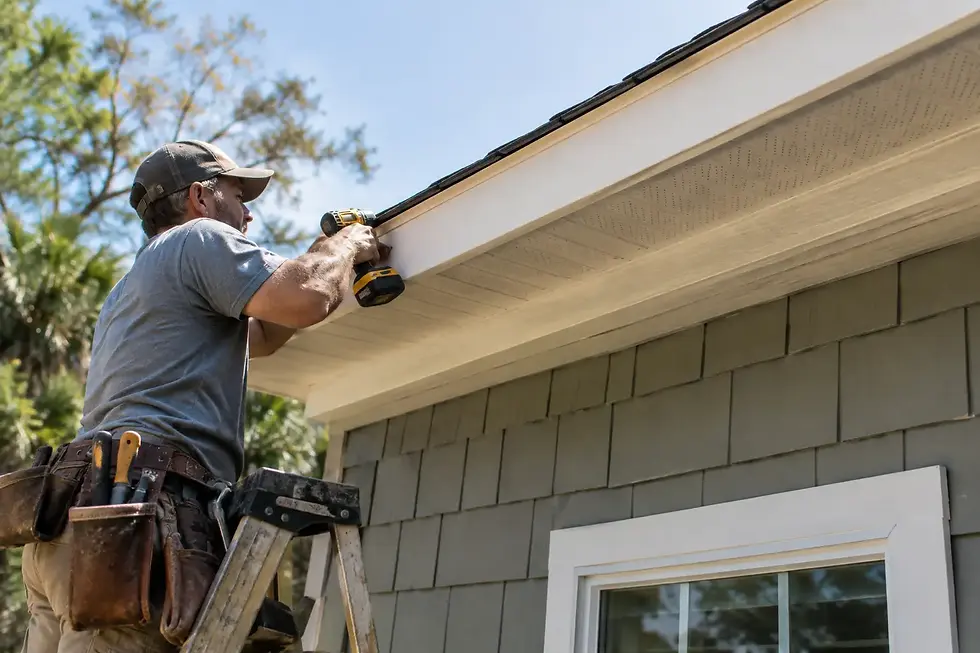
The first step is inspection. That means looking at the ceiling from below, but also tracing the area upward and outward. The roof edge, gutter system, fascia, soffit, wall connection, trim joints, and penetrations all matter. A repair plan should make sense based on how water is actually getting in, not just where the stain happens to show up.
Sometimes the source is straightforward: a leaking roof detail or a failed section of flashing. Other times, there are several smaller issues working together. For example, an undersized gutter may overflow during a heavy rain, soak the fascia, and send water behind the porch trim. Replacing the ceiling without correcting that drainage problem would be temporary at best.
Once the source is handled, damaged material needs to be removed far enough back to reach solid wood. Trying to preserve a soft or stained section because it is hidden behind new material creates a weak point in the repair. Framing should be checked for rot, securely fastened, and replaced where needed before the new ceiling finish is installed.
This is also the right time to check ventilation and drainage details. Not every porch ceiling needs venting, and adding vents without understanding the roof assembly can create new problems. The right approach depends on whether the porch roof is open, enclosed, insulated, or connected to the home in a particular way. Good repair work takes the existing construction into account instead of applying the same detail everywhere.
Choosing the Right Porch Ceiling Material
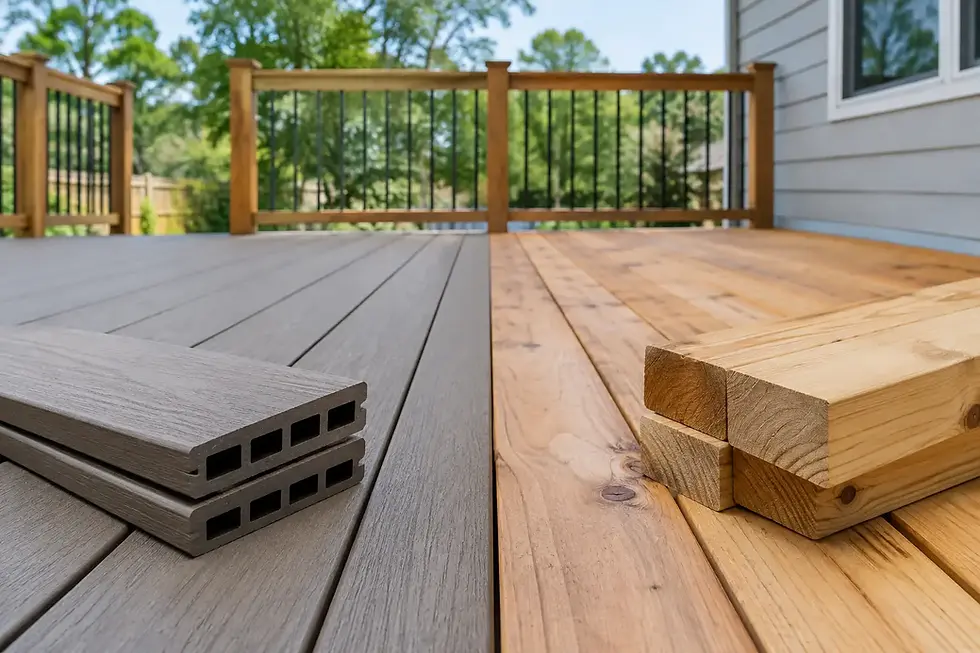
Material choice matters, but it comes after the water issue has been corrected. The best option depends on the porch design, the homeowner's preferred look, maintenance expectations, and how exposed the area is to weather.
Tongue-and-groove wood gives a porch a traditional, finished appearance. It works well when installed with proper spacing, primed or sealed where appropriate, and protected by sound roof and trim details. Wood moves with changes in moisture, so installation details matter. Tight joints, unfinished board ends, or paint applied only to the face can shorten its service life.
Fiber-cement or other exterior-rated panel products can be practical for certain porch ceilings. They offer a clean painted look and can hold up well in damp conditions, but they still need correct fastening, joint treatment, and edge protection. A durable material cannot overcome a leak above it.
Vinyl soffit-style materials are another option, particularly when low maintenance is a priority. They can work well on some homes, though the appearance is different from a painted wood ceiling. They also need properly laid-out framing and trim so the panels do not look wavy or improvised.
There is no single material that is right for every porch. A repair should fit the home rather than look like an afterthought. If the house has detailed exterior trim and a traditional style, a plain panel product may save some maintenance but change the character of the entry. On the other hand, a very exposed porch may call for a more weather-tolerant finish than the original material.
Details That Make a Repair Hold Up
Exterior carpentry is full of details that are easy to overlook once the job is painted. End cuts need protection. Trim joints need to be designed so water sheds away rather than sits in a seam. Fasteners need to suit the material and exterior conditions. Caulk belongs where it can seal a proper joint, not as a substitute for flashing or a way to hide a gap that should have been built differently.
Paint preparation matters just as much. Bare wood should be properly primed, especially cut ends and areas that will be hard to reach after installation. If the ceiling material is painted before it goes up, it still needs touch-up after fastening and cutting. A finished face with unprotected edges is a common starting point for moisture damage.
The ceiling also has to be installed on a sound, flat backing. If framing is uneven or compromised, a new beadboard or panel ceiling will show it. Straight lines, even reveals, clean perimeter trim, and properly placed fasteners are not just visual details. They help keep the assembly stable and make future maintenance easier.
When a Small Repair Is Enough
A localized repair can make sense when the damage is clearly limited, the water source is known and corrected, and the surrounding ceiling is still solid. Replacing one section of material, repairing trim, and repainting may be all that is needed.
A larger replacement is usually the better call when there are repeated stains, widespread peeling, soft framing, or several failed areas across the porch. It can be frustrating to remove more material than expected, but opening the affected area often reveals the full condition of the structure. It is better to make that decision with the ceiling open than to patch the same problem again next season.
For homeowners in Slidell and surrounding Northshore communities, an experienced carpenter can help separate a surface-level paint problem from a repair that needs deeper investigation. Spitzley Builds approaches exterior repairs by looking beyond the finished face and explaining what is found, what needs attention now, and what can reasonably wait.
A porch ceiling should make the front of the house feel finished, not leave you watching the forecast and wondering where the next stain will appear. When the repair begins with moisture control, sound framing, and the right material for the setting, the result is not just cleaner-looking. It is built right, built to last.

Comments